





Horchata Powder: A Rising Flavour Trend for Australian Bubble Tea Menus
Horchata has quietly become one of the most requested "new" flavours on Australian bubble tea and specialty drink menus. It's not actually new — it's a centuries-old rice and cinnamon drink from Latin America — but for most Australian operators it's an unfamiliar flavour with an increasingly familiar name, thanks to growing exposure through Mexican-inspired cafés, TikTok drink trends, and international menu crossovers.
That combination — genuine novelty with rising brand recognition — makes it a low-risk addition for operators looking to freshen up a menu without chasing a flavour that disappears in a season. This guide covers what horchata actually is, why it's gaining traction here, and how to source it in a format that works at bubble tea volume.
What Horchata Actually Is
Traditional horchata is a milky, subtly sweet drink built on rice, blended with cinnamon and vanilla notes. Regional versions vary — Mexican horchata leans on rice and cinnamon, while Spanish horchata is traditionally made from tiger nuts — but the flavour Australian consumers are encountering through cafés and social media is almost always the rice-and-cinnamon style: creamy, lightly spiced, and more comforting than sweet.
It sits in a flavour space Australian menus don't currently cover. It isn't a fruit tea, it isn't a matcha or taro-style milk tea, and it isn't a straight coffee drink — which is exactly what makes it useful as a menu differentiator rather than a direct substitute for something you already sell. The cinnamon-forward profile also gives it a seasonal versatility most bubble tea flavours don't have: light and refreshing over ice in summer, warming and spiced when served hot in winter.

Why It Matters for Australian Operators
Horchata's biggest commercial advantage is flexibility. It works as a milk tea base, blends into smoothies and slushies, and can be served hot in cooler months as a spiced, comforting alternative to standard milk tea — genuinely useful for operators trying to build a winter menu without inventing an entirely new category.
It also carries a built-in marketing hook. Because horchata already has recognition through Mexican and Latin cuisine crossovers, it doesn't need to be explained from scratch on a menu board or Instagram post the way a lesser-known flavour would — customers arrive with some curiosity already in place, which lowers the barrier to a first-time order. For operators running social media accounts alongside their store, a single well-photographed horchata drink tends to travel further than a standard milk tea post simply because the name and story are more shareable.
It's also a genuinely different customer than your typical fruit tea buyer. Horchata tends to appeal to customers looking for something closer to a dessert drink or specialty latte, which can help lift average order value when it's positioned and priced as a premium item rather than a standard menu addition.
Sourcing the Right Format
Traditional horchata is rice-soaked, blended, and strained — a preparation method that doesn't scale in a bubble tea environment built around speed and consistency. A powder format solves this the same way it does for other traditional drinks adapted to high-volume service: no soaking, no straining, and no batch-to-batch variation in texture.
Look for a powder that blends smoothly into both milk-based and water-based bases, holds its cinnamon-forward flavour without becoming one-dimensionally sweet, and is stable enough to use across smoothies, milk teas, and lattes without reformulating the recipe for each format. A resealable bag format also matters operationally — horchata powder that clumps or degrades after opening creates waste and inconsistency across shifts.
A simple starting ratio for a standard horchata milk tea is comparable to most milk tea powders on your existing line — roughly one part powder to the same water or milk ratio you already use for your core menu, adjusted to taste. This means minimal retraining for staff already comfortable making your standard drinks.

Hank's Tea Horchata Powder: What's Available for Wholesale
Bossen Horchata Powder — $25.00 per 1kg bag / $440.00 per carton (20 bags) 🆕 New Arrival
Sourced from Bossen, this horchata powder delivers the authentic rice-and-cinnamon flavour profile in a format built for high-volume service — no soaking or straining required. It blends easily into smoothies, bubble teas, lattes, and slushies, giving operators a single SKU that covers several drink formats rather than a niche ingredient that only works one way.
The powder comes in a sturdy, resealable bag designed for repeated use behind a busy bar, with an 18-month shelf life from production date. Each carton holds 20 bags at 46.2lb total, a practical volume for both single-site cafés trialling the flavour and multi-site operators rolling it out across locations. Country of origin is Taiwan, produced to the same standard as the rest of the Bossen range already stocked by many Hank's Tea customers — so it slots into an existing order without adding a new supplier to manage.
Menu Ideas Worth Testing
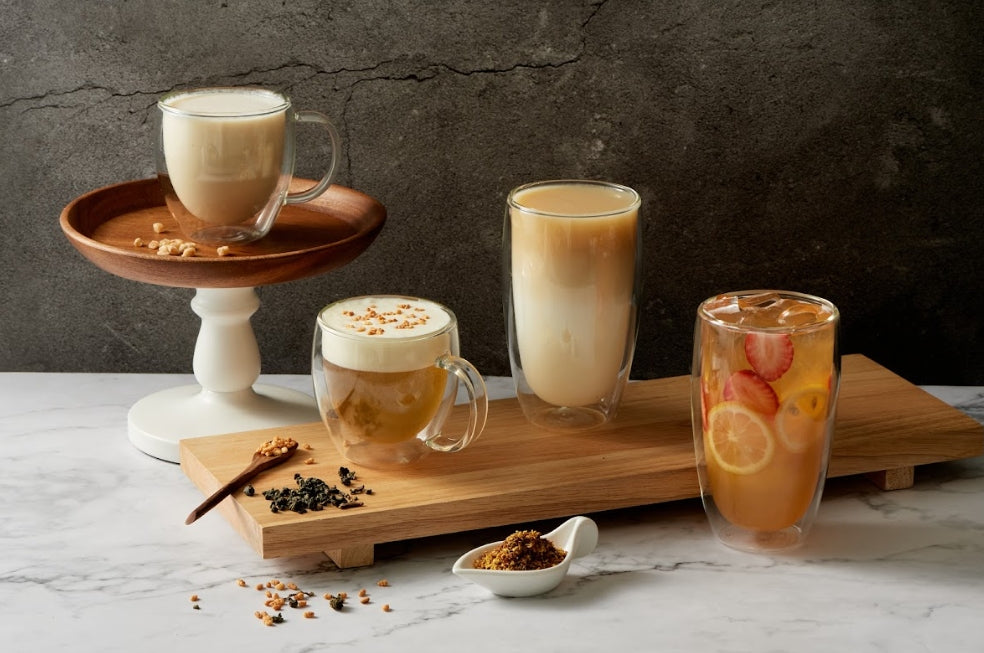
The simplest entry point is a horchata milk tea — swap your usual milk tea base for the horchata powder and keep everything else the same. From there, a horchata smoothie blended with ice is an easy dessert-adjacent option, and a hot horchata latte gives winter menus a genuine point of difference rather than another variation on chai or matcha. Because the flavour is naturally spiced rather than fruit-forward, it also pairs well with a light dusting of cinnamon or a drizzle of brown sugar syrup for operators wanting a slightly more premium presentation.
Order from Hank's Tea
Bossen Horchata Powder is in stock now and ready to ship. Contact our team today for a wholesale quote, to discuss volume pricing across multiple sites, or to request a sample before committing to a full carton.


Leave a comment