





After Fine Food 2026: Buyers and Sellers Are Looking at Completely Different Things
Every year after walking Fine Food, I sit down and write up what I saw. My notes from this September's show came in three parts: what's trending right now, what buyers should take home, and how sellers should prepare.
Here's what I found.
1. What was moving on the show floor this year
The first obvious change: far more overseas suppliers want into the Australian market than in previous years. Asia, the Americas, Europe — and they weren't there to look around. They came with full product lines, price lists and samples, ready to meet buyers directly.
What does that tell us? Australia's profile has risen internationally. The population isn't huge, but average spend holds up, the channel structure is clear and the regulations are transparent. For overseas brands it's a market that's "not big, but worth doing". Expect competition to keep intensifying.
Second, matcha is still a high-profile category. Almost every cafe now needs a matcha they can stand behind. That's no longer a bonus — it's the baseline.

But the question isn't whether you sell matcha. It's whether you've chosen the right one. Finding the right matcha for your cafe, bakery or restaurant has become critical — two products can both be called matcha and sit a long way apart in grade and price.
My first quick filter for matcha: look at the colour. Higher grades are bright and vivid, leaning towards a fresh jade green. As the grade drops, the colour turns yellower and duller, with brown tones creeping in. It isn't 100% accurate, but on a show floor, when you need to decide fast whether a powder is worth a longer conversation, colour is the quickest tell. From there you get into origin, milling method and how it performs with milk.
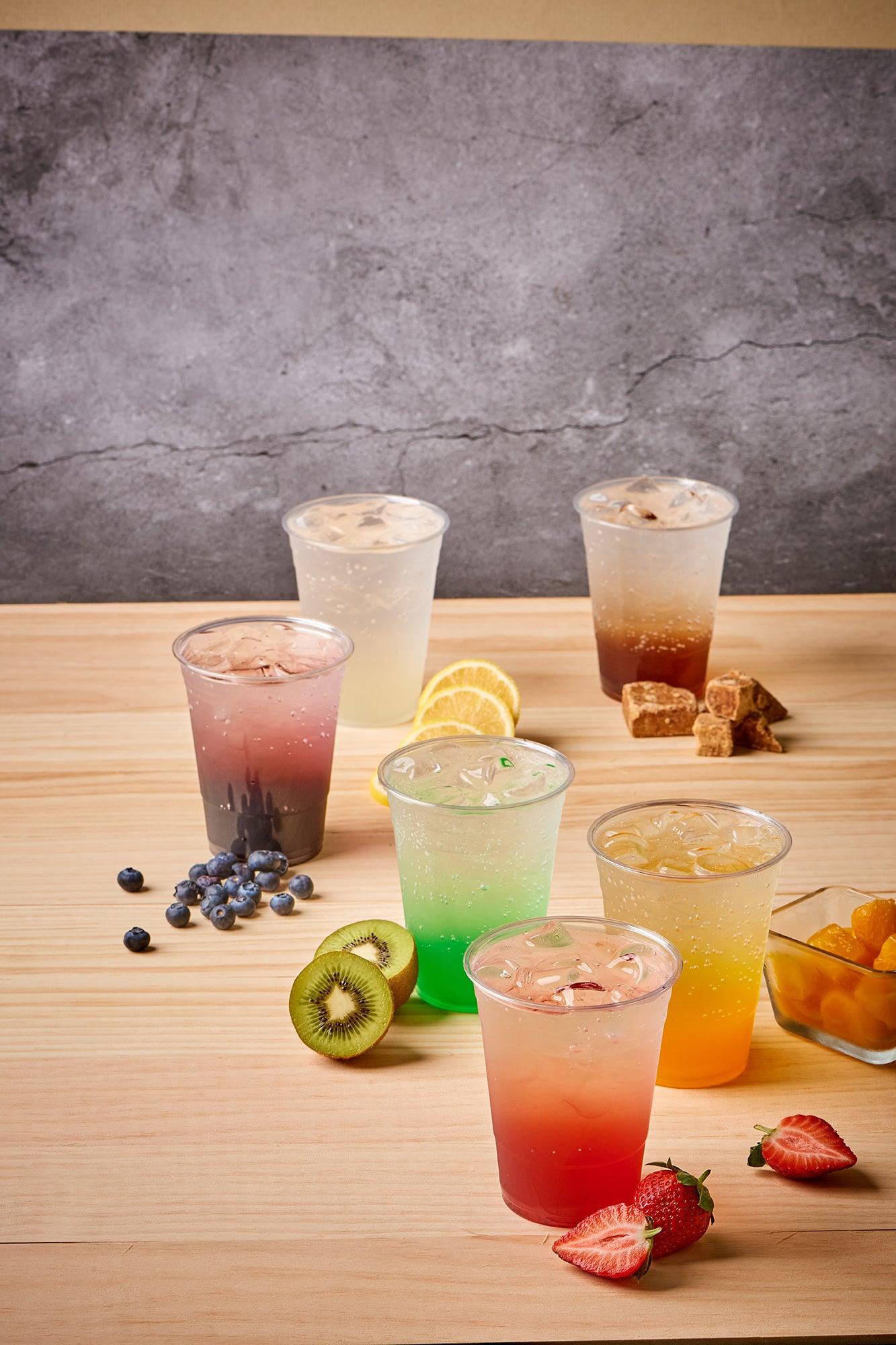
Third, FMCG and RTD are big. And it isn't only Asian bottled drinks coming in — local Australian manufacturers are in the game too. Ready-to-drink is eating into part of the demand that used to belong to tea shops and cafes. Anyone running a store should keep that in mind.
Fourth, and easy to overlook: the serious buyers really are on the floor. 7-Eleven, Costco, BP, Grill'd — their buying teams are actively hunting for good products at the show. They're not passing through. They're there with a brief.
So if you're a supplier, the person walking past your stand might be your most important order of the year.
2. If you're a buyer or restaurant owner: what to take home
A trade show can easily turn into a fun day with nothing to show for it. You eat samples all day, collect a bag of brochures, and nothing happens once you're back.
My advice comes down to three things.
First, work out what product types your target customers actually buy. Not "this tastes great" — "will my customers buy this?" There's far too much good food at the show. What you bring home should fit your customers, not your own palate.
Second, go back to your menu and design it around your business, not around products. When something new comes in, know where it sits on the menu, what it replaces, what it pairs with and what margin it carries — before you place the order.
Third, find the person at the supplier who actually looks after your account, and keep that relationship alive. The value shows up when you're short on stock, need a recipe adjusted or want to run a promotion at short notice. A business card from the show is worthless if three months later you can't remember who gave it to you.

3. If you're a seller: how to prepare for your next show
This part is for overseas suppliers who want to sell into Australia, and for local suppliers getting ready to exhibit.
It comes down to one line: be local ready.
Unless you're a major global brand, no Australian buyer is going to import directly from you without trust already in place.
I've seen this play out too many times. An overseas brand flies in, the product is good and the price looks sharp. Then the buyer asks: do you have a warehouse in Australia? Can you supply small quantities? Is your labelling compliant here? Who do I call when something goes wrong? And the conversation stalls.
Australian buyers aren't looking for the cheapest option. They're looking for the one they won't have to worry about after placing an order. Local stock, a local contact, local compliance, a workable minimum order — get those sorted and your product has a real chance of being evaluated. Skip them, and no matter how well the conversation goes at the stand, the order won't follow.
Trust isn't built in one show. But one show is enough for a buyer to see whether you're ready.
My takeaway
After every Fine Food, my biggest impression isn't what's trending this year. It's that buyers and sellers stand in the same hall and look at completely different things.
The buyer is asking, "Can this go into my business?" The seller is thinking, "How do I convince you my product is good?" That gap is why so many deals never happen.
Whichever side you're on, the most practical mindset for a show is to put yourself in the other person's position for a moment. If you're an operator, ask whether this supplier can deliver consistently for the long term. If you're a supplier, ask what problems this operator will face after they place the order.
Get that right, and you leave with more than samples and business cards — you leave with things you can actually execute over the next twelve months.
Order from Hank's Tea
If you're reviewing your matcha or tea range after the show, we can help you compare grades and find the right fit for your menu. Contact our team for a wholesale quote or to request samples.

發表評論